


MAKE THE RIGHT CHOICE!
This guide is designed to help you answer the many questions regarding the purchase of a solid hardwood floor. You will know more about the different characteristics of this product and will be better prepared to make the right choice. You will purchase a hardwood floor perhaps only once in your life, so it’s important to be well informed.
WHY CHOOSE A HARDWOOD FLOOR?
Solid hardwood flooring makes an excellent flooring choice. It’s a durable material, available in a vast range of species and colours that will complement your furniture and decor. In addition to creating a warm atmosphere, the resale value of your property will increase. Unlike other flooring types, solid hardwood is easy to maintain and provides a healthy, hypoallergenic environment. Plus it’s recyclable. Another great advantage is that it can be refinished to its original beauty for a modest sum of money. In terms of purchase price, it is more expensive than most other floor types (50%); however, its service life can easily exceed 50 years, while the service life of other types of floor barely exceeds 10 years. How can you go wrong?
DIFFERENT TYPES OF HARDWOOD FLOORING ON THE MARKET TODAY
-
Natural Hardwood Flooring
A natural or traditional hardwood floor is one made of unfinished hardwood strips which are sanded, stained (if desired) and varnished on site after installation. It can be installed by the consumer but the sanding and finishing require the services of specialists. This type of flooring has been in existence for generations, and sanding and finishing techniques have greatly evolved over the years. Its final appearance is smooth and the strips have no V joints (bevels on the sides of the strips).
There are inconveniences with this type of flooring. The great quantities of dust created during sanding and the noxious fumes of certain types of urethane used are only a couple of examples. Plus the time required to do all the work of sanding and finishing can exceed a week, depending on the number of coats of urethane to apply (3 or 4). Even though their drying time is faster than that of traditional (solvent-based) urethanes, water-based finishes are generally less resistant but have the advantage of yellowing less.
It’s also important to consider that the final result of the work can sometimes be of medium quality. Site conditions, other work in progess, atmospheric and climatic conditions, and the finisher’s experience, professionalism and attention to detail as well as the quality of his equipment are so many factors that will influence the beauty of your hardwood floor. Another aspect to consider is that urethane sometimes brings out the natural colours of the species that were not apparent at the time of installation. It can be more difficult to lay out the natural colour of a species with this type of hardwood flooring. After several years have passed, when the floor’s finish starts showing signs of wear, it can be sanded and refinished to its original shine.
The original purchase price of traditional hardwood flooring is relatively low and the cost of the entire project will vary depending on the fee charged by the finisher. As in any type of solid hardwood flooring, traditional hardwood remains a good choice considering its long service life. You will enjoy it for years to come.
Prefinished Hardwood Flooring
Prefinished, or factory-finished, hardwood flooring refers to a floor made of solid hardwood strips that have been sanded, stained (if desired) and protected by a finish that is applied and cured by ultraviolet light in the factory, under ideal conditions. A finished applied in the factory is generally more resistant to wear that finishes applied on location, as in the case of traditional hardwood floors. The finish of factory-finished floors consists of many coats of urethane containing aluminum oxide or other anti-abrasive ingredients which provide the flooring with a finish that is exceptionally resistant to wear. In addition, most urethanes applied in the factory also contain ingredients that reduce changes in the colour of the finish as much as possible. All there is to do is install the floor, a job easily done by the consumer. Each factory-varnished strip has a Micro-V joint (bevels on all 4 sides of the strip) which allows each strip to stand out in the floor.
Factory-varnished floors also have the advantage of allowing you to easily match up natural colours in the wood strips as you install them. After several years have passed, when the floor’s finish starts showing signs of wear, it can be sanded and refinished to its original shine, just like the traditional hardwood floor.
Its original purchase price is higher than that of a traditional hardwood floor but its overall cost is generally less, considering the cost of sanding and finishing a traditional floor. In addition, a traditional solid hardwood floor or a prefinished hardwood floor will add value to your residence. Excellent value for money and one of the best selections among different types of flooring.
Engineered Hardwood Flooring
An engineered hardwood floor is one whose surface only is made of solid hardwood. This solid hardwood surface layer, whose thickness varies from one manufacturer to the next, is glued onto a plywood base to give it greater stability. These products are generally factory-varnished and available in individual strips or mats of 2 or 3 strips. Application of this type of flooring is generally limited to condominiums since it is possible to apply a soundproofing sub layer. Being more stable, they are also used in areas where the relative humidity is higher than usual.
Many manufacturers offer this type of flooring. The quality, number of layers of plywood, thickness of the solid wood top layer, and the quality of the finish varies greatly from one product to the next and the price usually reflects the quality of the product.
Engineered flooring is often glued onto a subfloor made of concrete, plywood or an acoustic diaphragm. It can also be nailed (stapled) onto a sheet of plywood. Depending on the thickness of the upper solid hardwood layer, the floor’s service life will be much less (50%) than a traditional or prefinished hardwood floor, since once the finish starts showing signs of wear, sanding and refinishing are limited to the thickness of the upper layer of solid wood.
The purchase price of most engineering hardwood flooring is generally much higher than that of prefinished solid hardwood flooring. In addition, its installation is much more complex and must often be done by manufacturer-approved installers to maintain the warranty. Laminated flooring is a major investment, given its service life, and should be installed in areas where you want to enjoy the warmth of real wood but limitations make the installation of a solid hardwood floor impossible.
Floating, Stratified or Laminated Flooring
A stratified, floating or laminated floor has printed surface, a photograph protected by a layer of plastic polymer which imitates the grain of solid wood. Since it’s a photograph, the wood-imitation pattern is repeated from one panel to the next, which of course is not the case with solid hardwood. The base of a floating floor consists of MDF (Medium Density Fibre) or HDF (High Density Fibre) which are made of a mixture of sawdust and glue, compressed to different levels. The installation is called ‘floating’ because no nails or glue hold the floor to the subfloor. A sublayer of styrofoam must be installed between the subfloor and the product. This is easy to install; it’s a matter of putting glue into the panel mortises and assembling it. Some of today’s floating floors don’t even need glue; their panels are clipped together. This product type can be found at most construction material manufacturers and it is relatively economical, depending on the desired quality.
Floating flooring cannot be restored when worn out or repaired when damaged. Its service life is limited to a few years, which can make it an expensive flooring option over the long term. It adds no value to your home and must be considered a low-end, low-value, disposable floor. It’s often used in basement rec rooms and apartments.
COMMONLY AVAILABLE NORTH AMERICAN SPECIES
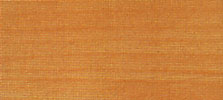
Many wood species are available on the market today and each has its own colour, grain, hardness and stability charateristics. The most popular North American species are:
| Cherry | White oak |
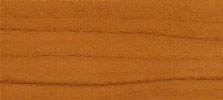 |
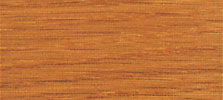 |
| Red oak | Maple |
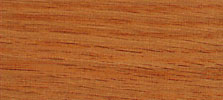 |
|
| Ash | Yellow birch |
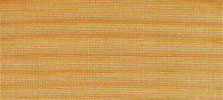 |
 |
| Walnut | |
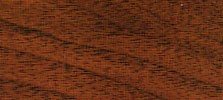 |
Each species is unique. Your selection must first consider your visual preferences and the look you want for your décor. Flooring is an important part of decorating a home.
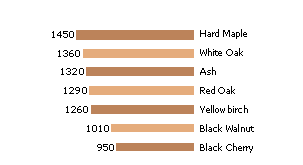
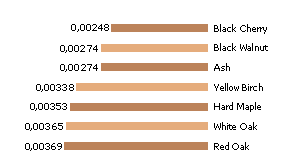
Species durability and hardness are two aspects among many to consider in choosing your floor. However, they are not the priority in making your decision, since all wood species can be damaged if maintenance is neglected and certain precautions not taken. For more information on species density and stability, refer to the Species Characteristics section.
Density or Hardness of Wood Species
Species Stability
QUALITY OR GRADES
The term grade, or quality, refers to the natural characteristics of the species. Each grade displays its distinctive natural colours and this typically does not indicate a difference in quality. In addition, each grade should be linked to information on minimum strip length, and more importantly, average length strip.
Choosing a grade is a matter of personal taste.
A more uniform grade will be more expensive than a grade with natural
colour variations. In the prefinished products industry, the terms or
names used to designate quality levels are often different from one manufacturer
to the next. A grade from Manufacturer A can be similar to a grade from
Manufacturer B, whilst still displaying significant differences which
might justify a higher or lower price. You should consult your retailer
and ask him questions to truly understand what a manufacturer is offering
in terms of strip colour and average length in the grade that you want.
In the traditional flooring industry, specific terminology and standards
exist which guide the consumer’s choices more easily.
Select or Better (Prefinished)
- For those who like colour uniformity and purity.
- Superior quality and uniform appearance.
- Free of knots, mineral streaks, etc.
- Very good strip length.
- Traditional flooring equivalence:
- Select or Better (Red oak, white oak, ash, cherry, walnut)
- First grade (Maple, yellow birch)
- For those seeking a compromise between uniformity and the great variations in natural colour.
- A combination of Select of Better (±70%) and Tradition (±30%).
- Varied colour appearance.
- Free of knots.
- Best average strip length.
- Traditional flooring equivalence:
- #1 Common or Better (Red oak, white oak, ash, cherry, walnut)
- Second or Better (Maple, yellow birch)
- For those who enjoy natural colours.
- The natural colour variations of the species are prominent.
- All variations in the natural colours of the sapwood and heartwood are accepted, including mineral streaks and brown streaks.
- Small sound, unsplit and tight knots with a maximum of ¼” (6 mm) may be accepted in very limited quantities.
- Acceptable average strip length.
- Traditional flooring equivalence:
- #1 Common (Red oak, white oak, ash, cherry, walnut)
- Second Grade (Maple, yellow birch)
- #1 Common (Red oak, white oak, ash, cherry, walnut)
- For those seeking a more rustic look.
- The natural colour variations of the species are prominent.
- All variations in the natural colours of the sapwood and heartwood are accepted, including mineral streaks and brown streaks.
- Grub holes, knots and most open characters are accepted.
- Generally short average strip length.
- For prefinished strips (only), knots and other open characters are filled with wood paste before factory sanding and urethane application.
- Traditional flooring equivalence:
- #2 Common (Red oak, white oak, ash, cherry, walnut)
- Third Grade (Maple, yellow birch)
- Mixture of "Select & Better" (±55%), "Tradition" (±35%) and "Country" (±10%).
- Varied appearance from all natural colour variations from the species .
- The best average length.
- Worm holes, some knots and most of the little open characters are accepted.
- Checks and minor manufacturing defects (such as torn grain) are allowed.
However, mismilling defects and sticker
stains are refused. - In factory finished (only), knots and other open characters are filled with wood fi ller.
- Traditional flooring equivalence:
- #2 common & Better (all species)
The choice of strip width is a matter of personal taste and desired appearance. Manufacturers typically offer the following widths: 57 mm (2 1/42), 83 mm (3 1/42), 108 mm (4 1/42), 127 mm (52) and 152 mm (62). Some manufacturers also offer different widths, such as 64 mm (22), which are not so common. It’s best to choose strips of a recognised width to avoid problems later, should floor repairs be required. Please note that narrow strips are more stable in fluctuating relative humidity conditions. For more information, refer to the Wood University section.
To avoid wide strip contraction, it is important to maintain your home’s room temperature between 18oC and 22oC (65oF and 72oF) and the relative humidity at the most stable possible level between 40% and 45%.
FINISH AND GLOSS TYPES
There are 4 main degrees of shine for prefinished flooring:
-
- Gloss (85%-90%)
- Semi-Gloss (60%-65%)
- Satin (30%-35%)
- Matte (10%-15%)
Another type of finish available on the market is the oiled, or penetrating, finish. This finish is not at all comparable to the usual urethane finish of traditional or prefinished flooring. It provides a very matte finish to the floor. It requires a far more regular and thorough cleaning schedule than urethane finishes, since as it wears it needs frequent applications of oil. On the other hand, it has the advantage of permitting the repair of damanged strips without needing to remove them. Simply evenly sand the damaged area and re-oil the floor. Please note that you cannot apply oil onto a floor finished with urethane, unless you perform a complete and thorough sanding. On the other hand, an oil-finished floor cannot ever be refinished with urethane, since oil penetrates wood and oil is a substance that is incompatible with urethane.
STAINS
The choice of a stain colour does not influence the quality of the product. It’s done simply for personal taste in esthetics. However avoid pastel colours such as white, since they tend to show signs of wear more quickly. They are also harder to touch up and harder to restore.
One of the characteristics of stain is that it highlights wood grain when applied to open-grained species such as red oak, white oak and ash. When applied to closed-grain species such as maple and yellow birch, they attenuate the effect of wood grain and even out the surface.
Stain colours offered may differ from one manufacturer to the next, even when the names of certain colours are the same. There are many stain manufacturers and each flooring manufacturer has its own supplier. Also, the production equipment for stain application may play an important role in the final shade. Ask your retailer for a sample.
MOISTURE GUARD PROTECTION
Moisture Guard protection is a sealer spread over the strip bottoms, helping prevent dilation and/or expansion of the strips due to seasonal changes in relative humidity. This feature is offered by very few manufacturers. It is a tremendous advantage.
ANTIMICROBIAL FINISHES
Some manufacturers offer antimicrobial finishes. Urethanes cured by ultraviolet light are not a source of bacterial proliferation and are thus by their very nature antimicrobial. It’s important to understand that bacterial development takes place in a humid environment and by maintaining your home’s relative humidity at a normal level for human health (40%-50%), your floor will never be a source of bacteria. Should your home’s relative humidity be excessive over a relatively long period of time, bacteria would attack the wood, not the urethane. In addition, such conditions would impact many other materials in your home long before your flooring.
MOULDINGS
Many types of moulding may be required to complete the installation of your hardwood floor, such as stair nosing, reducers, T mouldings, door sills, quarter-rounds, etc. Ensure your retailer can supply you with the mouldings and accessories you need in the same stains and finishes as your floor. It is even highly preferable that these mouldings come from the manufacturer of the strips to obtain perfect matching.
CHOOSING A RETAILER
Your retailer should be a solid hardwood flooring manufacturer and not a general flooring reseller. He must be able to answer all your questions and advise you properly on the products, costs, installation, site preparation, maintenance and warranties of the products he carries. It’s important to find a dealer who is competent, professional and responsive to your needs. Here are some features to look for:
-
- Complete, professional showroom
- Qualified, competent staff
- Product inventory
- Controlled-humidity warehouse
- Delivery service
- installation service
- On-site measuring and consultation
- Site conditions inspection before product delivery and installation
- Mouldings, accessories and cleaning products availability
- Hardwood nailer rental
- After-sales service reputation
Prefinished flooring manufacturer warranties on finishes vary from 15 to 30 years. They are similar and all require regular, adequate maintenance of the product. If you follow your manufacturer’s recommendations on cleaning, you will maintain your floor’s beauty far beyond the duration of the warranty.
STRIP MANUFACTURING AND FINISHING QUALITY
You can get a good idea of the quality of the manufacture of the strips offered by your retailer. Ask your retailer to open a box and make your own evaluation of the quality of the product. Here are a few points which will help you make this evaluation and will guide you in selecting the product brand.
-
Micro-V
Micro-V is the bevel found on all sides of a prefinished strip. The point of the Micro-V is to create a demarcation between strips in order to highlight them. To avoid premature wear of the strips’ edges, as well as the accumulation of dust between strips, look for a product with the smallest Micro-V possible. Also check the consistency of the Micro-V; it should be the same size on the sides and ends of the strips.
Strip Fit
Take two perfectly straight strips and fit them together. The tongue and groove must fit perfectly, without being either too difficult or too easy to fit together. In either case the quality of the installation could be affected.
Uniformity
Place several strips on the ground and fit them together. Check surface uniformity by running your hand over the assembled strips. The surface must be even and you should not feel any variations in thickness; otherwise the quality of manufacture is questionable.
Stain
If you opt for prestained strips, check the homogeneity of stain application on the strips. Also check that the stain is correctly applied on the Micro-Vs and that you cannot see the species’ natural colour between strips once assembled. Finally, check that there is no deposit or excess stain on the Micro-V. Excessive stain can interfere with the adherence of the urethane. Stain application is an art mastered by very few manufacturers.
Finish
For prefinished strips, the application of UV-cured polymer urethane containing aluminum oxide considerably increases finish resistance to wear. Find out how many coats of urethane containing aluminum oxyde were applied. There should be at least 3 coats, integrated into the final finishing coats. There is no point in including aluminum oxide in the base coats if the finishing coats are poorly protected. You will thus have a good idea of the quality of the urethane used as well as the quality of its application Few manufacturers have mastered the art of incorporating aluminum oxide into the final finishing coats, or simply do not have the necessary equipment to do the job.
The number of finishing coats does not necessarily reflect the quantity (thickness) and quality of the urethane applied. However, the higher the number of coats applied for the same quantity of urethane, the smoother the finish. The urethane will adhere much better to the wood’s surface and to the bottom coats.
The total thickness of urethane applied varies from one manufacturer to the next. To check the thickness yourself, inspect the grain of an open-grained finished strip, such as red oak, white oak, or ash. The grain’s finish should have the same appearance as the finish on the rest of the strip. If there seems to be less finish in the grain, and the gloss appears different, it’s an indication that the total layer of urethane is thin.
INSTALLATION
It’s preferable to entrust the installation of a solid hardwood floor to a specialist if you don’t believe you have the necessary skills and knowledge. The professional will guarantee his work, which ensures a quality job.
If you opt to proceed with the installation yourself, you will need tools and preparation. You must design a sketch, ensure that the temperature and humidity of the room are controlled, and have a suitable subfloor and adequate tools. We advise you to carefully read the manufacturer’s installation guide before beginning the job.
LEVELS AND ROOMS IN THE HOUSE
You may install your hardwood floor in all the rooms in your home, with the exception of the bathroom, laundry room and similar, since water/humidity and wood do not make great partners. If you wish to install it in the kitchen, it’s recommended you place a mat in front of the sink to protect your floor from spills and grease. It’s a fact that the floor will probably wear out much more quickly in the kitchen than in other rooms.
Most solid hardwood floor manufacturers recommend that their products not be installed in the basement of a house. However, some manufacturers have developed glued installation techniques that would allow you to do so under certain conditions.
COMMERCIAL/RESIDENTIAL
A solid hardwood floor can certainly be installed in a commercial space. It will give the place charm and exceptional character. However, depending on the nature of the business, the number of people who go through it every day, and the conditions of usage and frequency of maintenance, the finish will wear more quickly and sanding and refinishing will need to be done more frequently. Although very popular, installation of hardwood floor in public areas is not covered by warranty in most cases.
CLEANING YOUR SOLID HARDWOOD FLOOR
Quick, easy, and regular maintenance is necessary to preserve the beauty of your hardwood floor:
1. Sweep and/or vaccuum to eliminate abrasive dirt.
2. Clean your floor with the manufacturer’s cleaning kit.
Simply spray your dustmop with cleaner and wipe your floor in the direction of the strips.
For more information on cleaning a solid hardwood floor refer to the Maintenance Guide section.
REPAIRING THE FLOOR
-
Replacing a Damaged Strip
There are repair kits on the market that allow you to make minor repairs if your floor is slightly damaged. If the damage is major, you may need to replace a strip. It a quick, effective alternative compared to sanding and refinishing the entire floor. It takes 30 minutes to replace a damaged strip. Please note that this procedure applies only to prefinished solid hardwood flooring. Do not hesitate to contact your retailer to know the procedure suggested by the manufacturer or refer to the Maintenance Guide section.
Restoring the finish
Over the years, your floor may show traces of wear, despite the quality of manufacture and finishing. There is no need to worry, as some floor finishes can be restored in a few simple steps that are easy to accomplish and do not require sanding and refinishing the entire floor. It’s possible to partially or completely restore the finish, using a gloss restorer. Ask your retailer for more information. He should be able to supply you with the necessary products.



